
Make better fibre-sensing decisions before they become expensive mistakes.
Establish whether your project is ready. Expose missing evidence, challenge assumptions and agree what must happen before the next commitment.
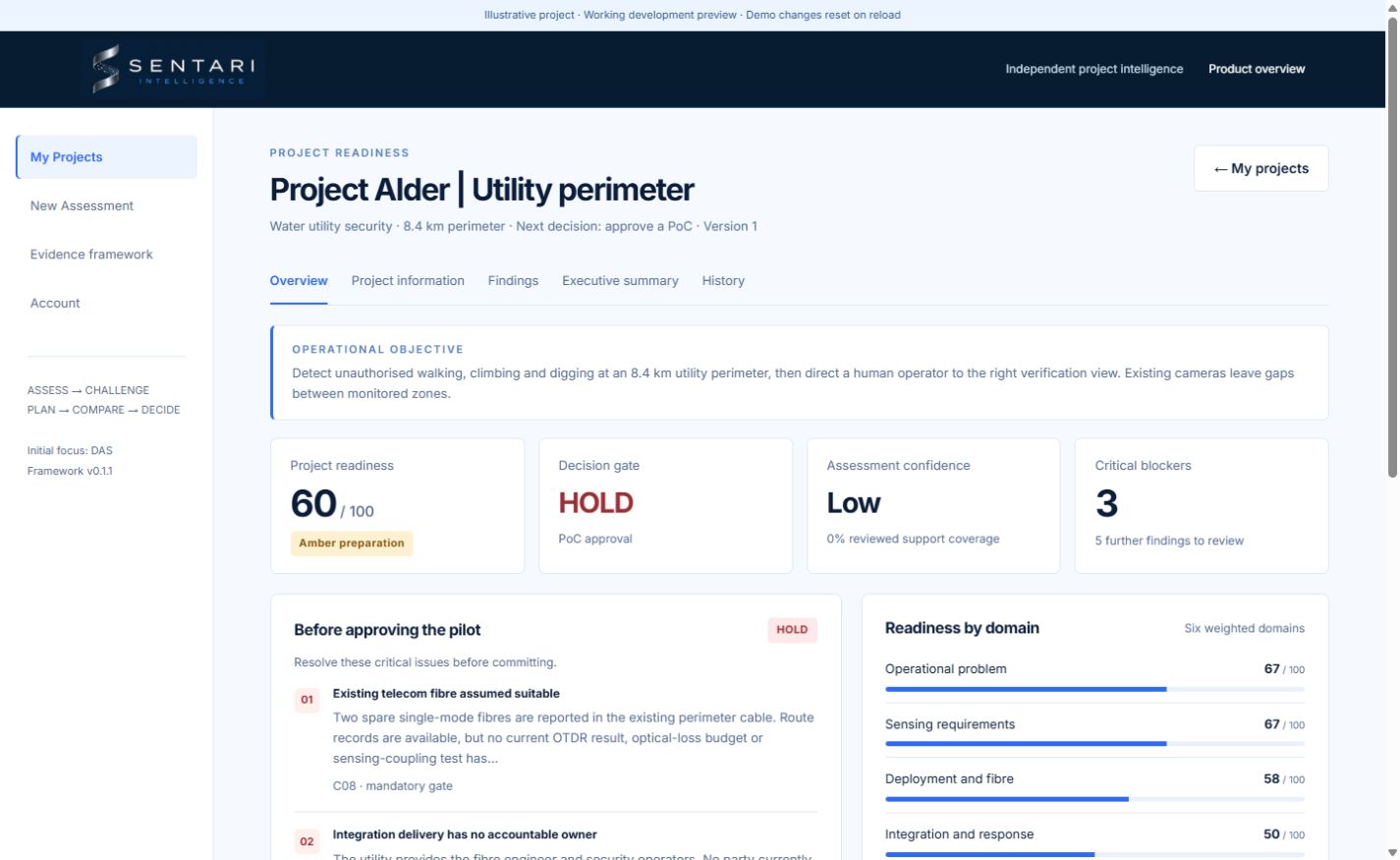
A £35,000 pilot. Three reasons to hold approval.
Project Alder follows a water utility preparing to test DAS across an 8.4 km perimeter. The question is whether the proposed pilot can produce evidence the team can use to make its next decision.
The operational objective
Detect walking, climbing and digging where camera coverage is incomplete, then direct the control room to verify and respond. Proposed targets include 15 m localisation and a defined nuisance-alarm limit. These are customer requirements to test.
What prevents commitment
The existing fibres have no reviewed suitability evidence. The integration has no accountable owner. Acceptance criteria remain unsigned. A readiness score of 60/100 cannot override those critical gaps.
01 · Project overview
The next decision, critical blockers and six readiness domains in one view.
Open full-size screen ↗02 · Project information
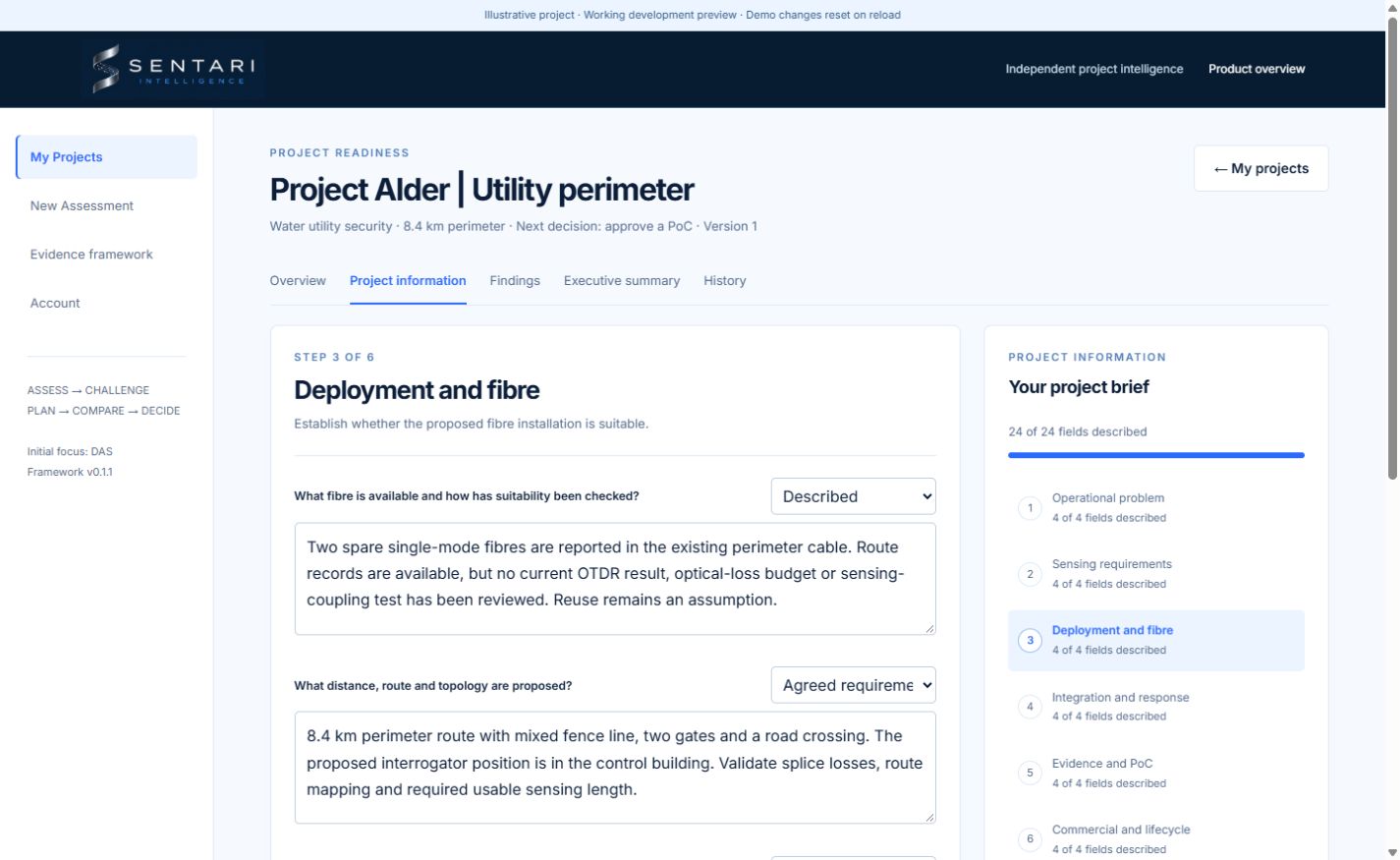
Capture the fibre, installation and site assumptions behind the assessment.
Open full-size screen ↗03 · Findings and next actions
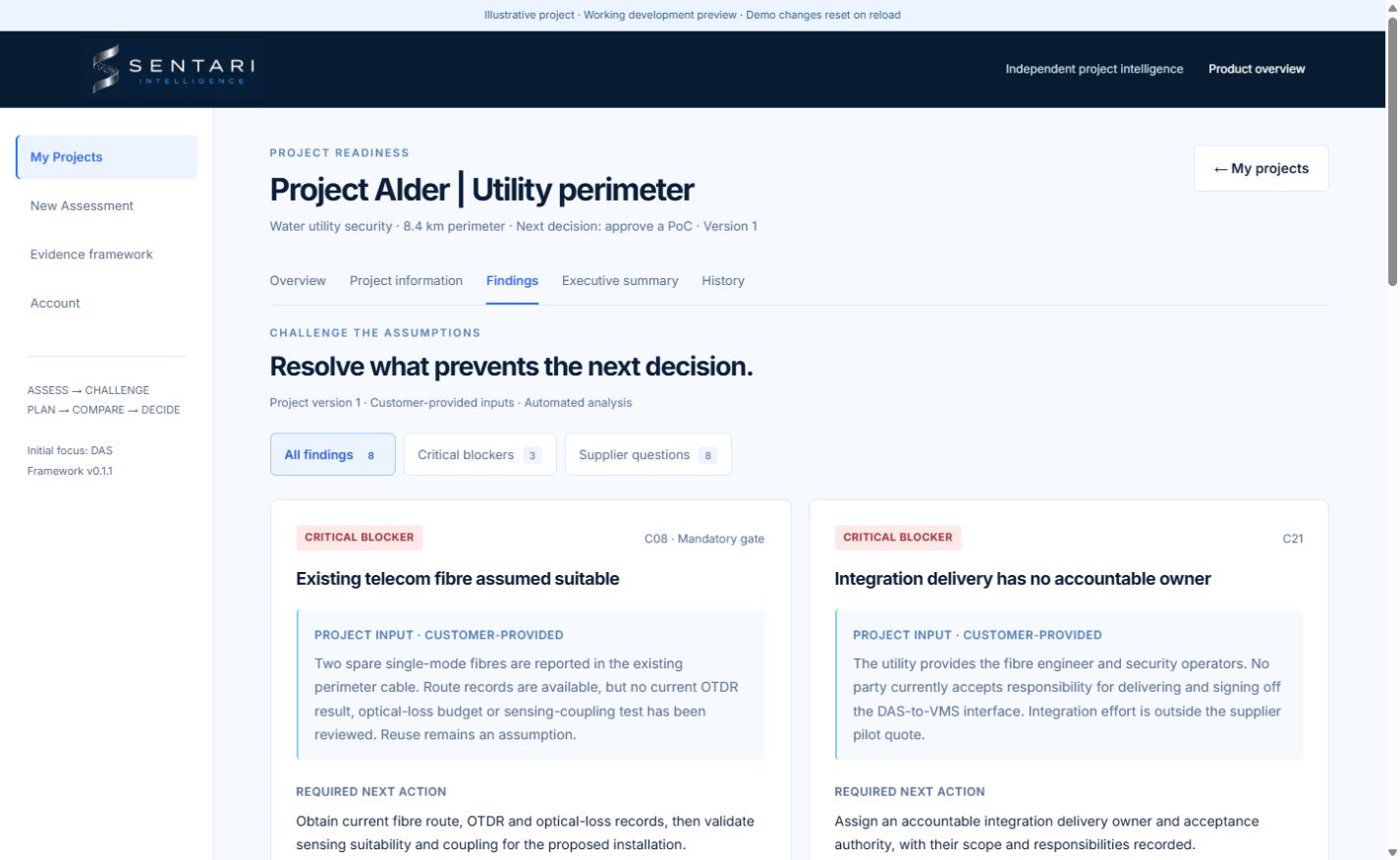
See why an assumption matters, what evidence is missing and the action required.
Open full-size screen ↗04 · Executive summary
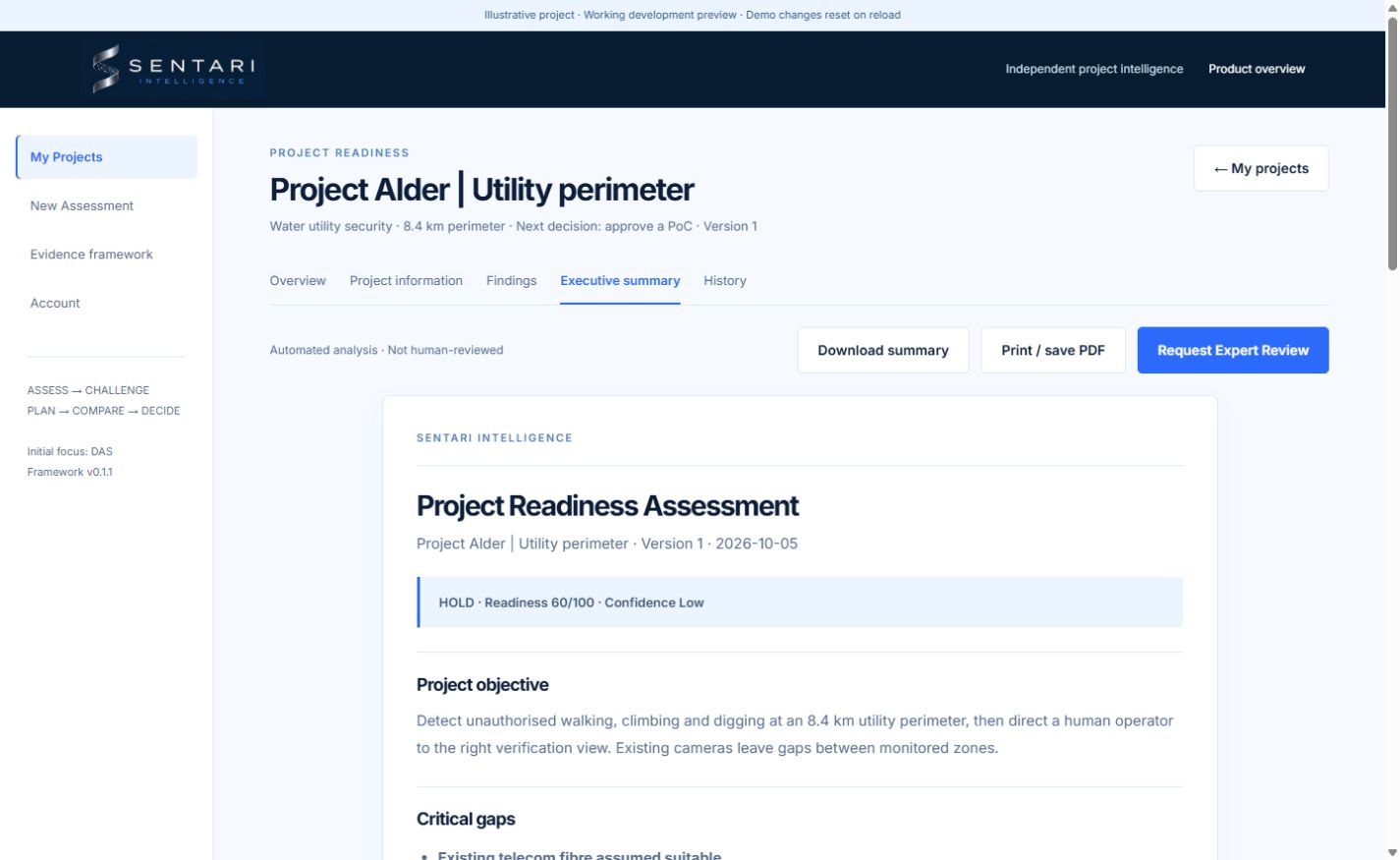
Bring the objective, decision and unresolved commitments into a concise briefing.
Open full-size screen ↗These are captures of the working development app. Project Alder, its figures and its facts are fictional. Readiness measures preparation for a decision; it does not predict detection performance. Invited account testing is underway. The new workspace is currently available by invitation.
A datasheet cannot tell you whether your project is ready.
A capable sensing system can still be a poor fit for an incomplete project. Unclear objectives, untested fibre assumptions and missing operational responsibilities can undermine the decision before installation begins.
Requirements before specifications
Define what needs to happen, where and under which conditions.
Evidence before confidence
Separate what has been demonstrated from what is assumed.
Ownership before deployment
Establish who verifies, integrates, operates and responds.
Assess. Challenge. Plan. Compare. Decide.
Establish the problem, requirements and available evidence.
Expose missing information and conflicting assumptions.
Assign next actions and evidence requirements.
Evaluate submissions against requirements. Dedicated module planned.
Record whether the next commitment is justified.
See what stands between your project and its next decision.
A structured intake, explainable assessment and executive summary in one project record.
Assess readiness
Evaluate preparation for a specific decision, with critical gates that a high score cannot bypass.
Find the gaps
Identify missing requirements, evidence, ownership and operating assumptions.
Challenge assumptions
Surface declared assumptions and the evidence needed to resolve them.
Focus supplier discussions
Turn priority gaps into specific questions and evidence requests.
Prepare for a useful PoC
Expose missing criteria and responsibilities before testing begins.
Brief decision-makers
Present the objective, risks, unknowns and next actions in a concise summary.
Your project requirements drive the assessment.
Supplier claims remain claims until the relevant evidence is reviewed. Unknowns remain visible. Sponsorship does not purchase a favourable recommendation.
Where DAS is unsuitable, or information is insufficient, the assessment should say so.
For people responsible for making sensing projects work.
Consultants and integrators
Develop a clearer brief and make supplier engagement more productive.
Asset owners and project teams
Understand what remains unresolved before committing budget or operational responsibility.
Engineering, security and procurement
Review a consistent decision record that separates evidence from assumptions.
Choose the support your decision needs.
The project workspace will be included in the existing Professional subscription. Expert Review is separately scoped and priced.
Sentari AI Free
General fibre-sensing guidance.
- Educational questions
- Introductory application guidance
- Limited usage
- No saved assessment
Sentari AI Professional
Independent guidance and a saved-project workspace. Workspace access is currently an invited pilot.
- Saved project assessments
- Readiness and evidence confidence
- Gaps and assumption challenges
- Recommended next actions
- Executive summary
Sentari Expert Review
Separately scoped human scrutiny.
- Independent project review
- Technical and commercial challenge
- 60–90 minute consultation
- Written findings
- Scope and fee agreed first
The existing Professional price is £39.99/month. The project workspace is included at launch, with no second subscription. Access is currently by invitation while account verification and service arrangements are completed. Expert Review is separately scoped; team access is not currently available.
Structure the project. Escalate the decision when needed.
Use the workspace to clarify the information and identify what needs attention. Request a separately scoped human review when the decision requires deeper scrutiny. You choose which project information is shared.
Does Sentari AI recommend manufacturers?
The initial release assesses requirements and evidence gaps. It does not provide a ranked manufacturer comparison.
Does it replace an engineer or consultant?
It supports decisions. Site verification, engineering approval and operational acceptance remain with responsible professionals.
Can it assess an existing project?
Yes. The assessment focuses on preparation for the project's next decision.
Can it design a PoC?
The first release identifies gaps in PoC preparation. A dedicated plan-generation module is deferred.
How is project information handled?
The example is fictional and resets on reload. Invited pilot accounts can save fictional project records privately. Live customer projects and AI conversation require the completed access, privacy and service arrangements.
Can suppliers and teams use it?
Suppliers can use the same evidence framework. The first release supports individual accounts; team access requires a separately agreed scope.
Start with the problem. Establish the evidence.
Understand what must happen before specifications, demonstrations and proposals begin driving the outcome.